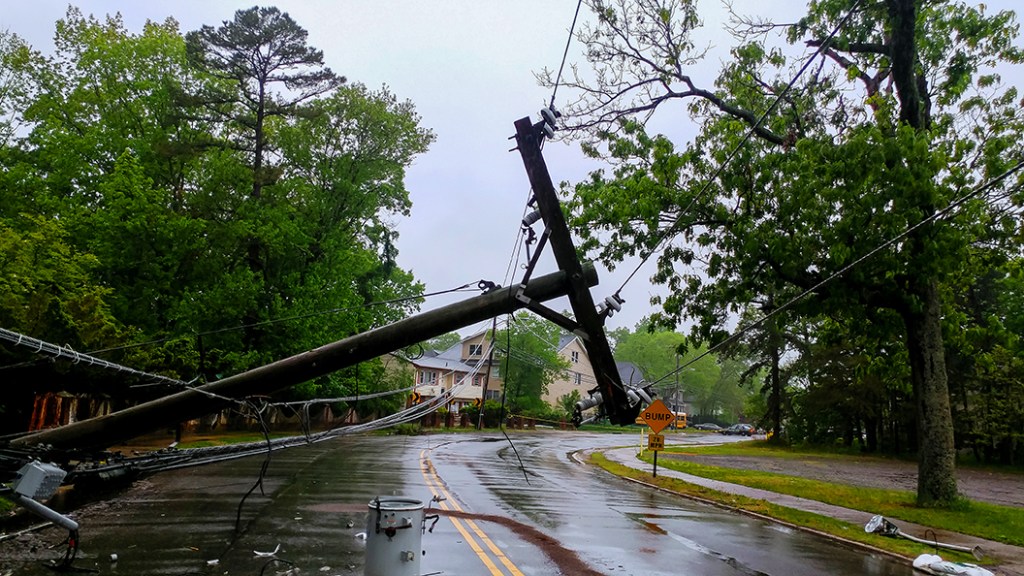
Natural disaster.
In 2023, she was assigned as the Federal Coordinating Officer for the Federal Emergency Management Agency (FEMA), supporting recovery efforts following Hurricane Idalia, a destructive Category 4 storm that caused significant damage and flooding to homes, businesses, and infrastructure across 32 declared Georgia counties. She needed to bring on many technical specialists to support current and past Presidentially declared disasters, ensuring FEMA could fulfill its role in restoring the vital infrastructure of public facilities, services, and the economic base. Due to several large disasters occurring simultaneously, an external personnel contract was required to support Georgia’s recovery and avoid delays, even as the Senate passed a second continuing resolution.
Estimates projected damages to be more than $67.5M for those who applied for FEMA assistance with debris removal, emergency protective measures, and permanent damage restoration. During this time, FEMA was faced with providing aid to unaccompanied minors at the U.S. border, refugee resettlement, an Ohio train derailment, a Mississippi water main break, and multiple frequent year-round and intense storms, which strained the agency’s response capacities. Specifically, there was a shortage of technical specialists in FEMA’s Public Assistance (PA) program to support these declared counties.
To respond to a challenging operating environment, she coordinated accurate damage validation from site inspectors through project formulation, ensuring obligations were met by tracking resources. She studied the issues and identified 210 projects for 185 applicants that required the timely deployment of trained and qualified professionals. She spearheaded a Statement of Work to engage independent contractors through FLUOR under a six-month fixed-fee contract in support of PA disaster operations. This very tight timeline required her and her team to monitor deliverables to advance FEMA’s goals of reducing disaster losses and ensuring efficient, effective project management.
She assessed task assignments and managed human, fiscal, and material resources to support the technical contract specialists in conducting site inspections of sites with minor damage (e.g., roads and non-structural building damage) to validate and record damage descriptions. She executed the operating budget, prepared budget requests with justification for the FLUOR contract, and managed resources. She used technology to enhance processes by creating a user-friendly template that tracks site inspections and project completions. She worked with PA senior management to create visually detailed maps that identified the duty stations for the technical specialist. Since all technical specialists were deemed mid- or senior-level, they could manage multiple projects. She implemented a workforce-planning approach to prioritize the most complex projects that required accurate quantification, enabling them to promptly recommend solutions to issues, concerns, or problems. She leveraged technology to enhance mission execution by developing a task-assignment and monitoring dashboard to track site-inspection completion.
As a result, the contract was completed on time and without an extension, and efforts were enthusiastically received across the state. The technical staff provided high-quality services and exceptional customer service to disaster survivors in multiple counties on schedule and with limited resources. The speed of recovery efforts within the state and local governments and private and non-profit sectors improved Georgians’ confidence in FEMA.
 judykruger.com